PROJECTS
Selected
Work
A growing collection of student projects, freelance gigs, and personal experiments. Each one taught me something new about typography, identity, or just trusting the process.
The Pumpkin Carriage
3D model and render of a pumpkin carriage. Modeled, textured, and lit in Autodesk Maya for Polymesa coursework.
Editorial Type Study
A type-led editorial leaflet — setting the system, building the grid, and choosing the voice the page speaks in.
Campsite Scene
A campsite scene built in Autodesk Maya. Tent, fire pit, props — storytelling through environment design and lighting.
This Portfolio Site
The site you’re on. Custom-built in WordPress — six pages, one accent colour, type-led layouts. Mock-ups and process notes inside.
UIBS Loyalty System
Interactive loyalty platform built for hotels. Tier carousel, hotelier dashboard, coded end-to-end in HTML/CSS. Team project.
Project Vault Runner
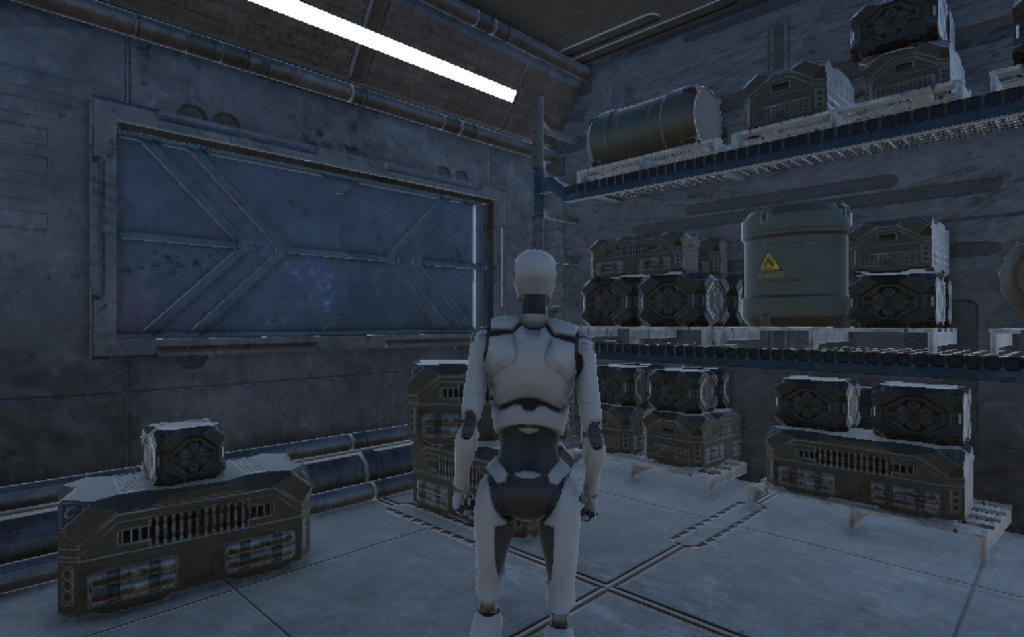
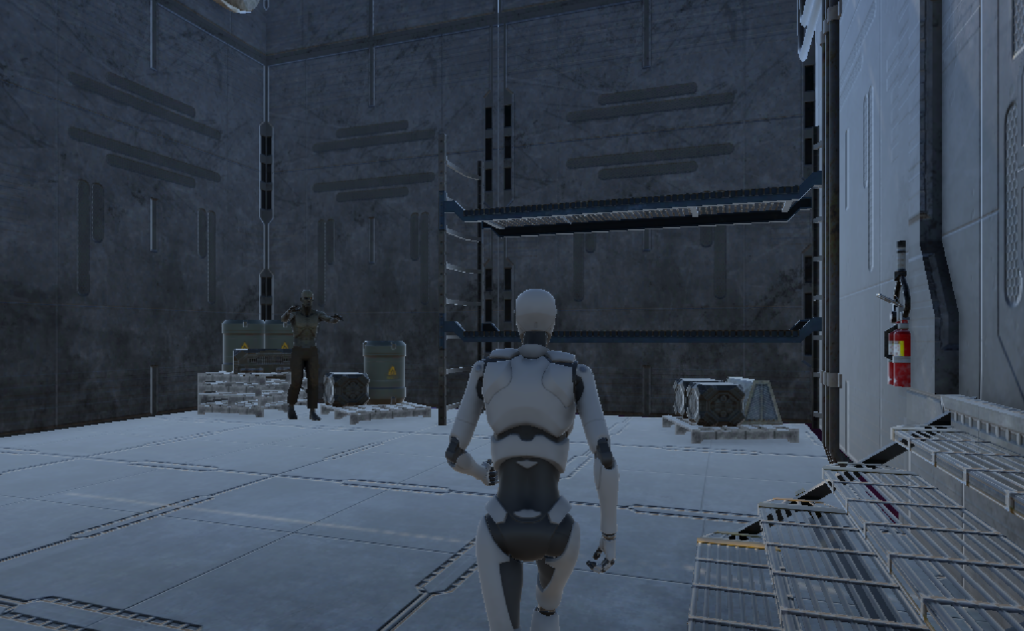
Two-level 3D survival game built in Unity for Lazaros Kouzelis’ 3D games class. You’re a robot on a seat in space, zombies come at you — don’t get touched.
The Pumpkin Carriage
A study in form complexity. Curves of a carriage are unforgiving — every smooth surface needs to read clean from every angle.
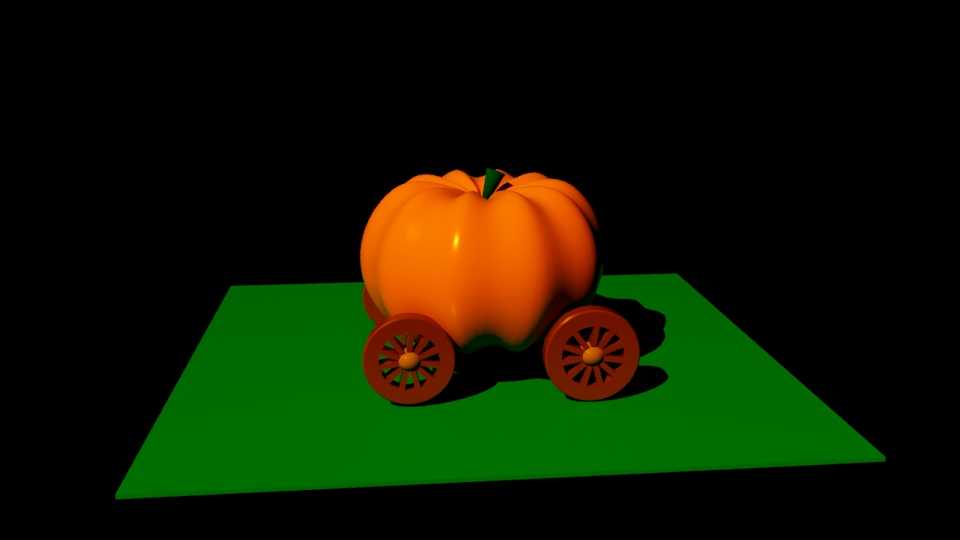
Modeled, textured, and lit in Autodesk Maya as part of my Polymesa coursework. The brief was to push polygon complexity and dramatic single-light staging.
The form
Started with reference of fairytale carriages — the pumpkin shape gives organic ribbing, the wheels give mechanical contrast. I leaned into that contrast and kept the surfaces soft on the body, sharper on the metal.
The render
Single-light staging keeps the scene cinematic. The light’s behind and slightly above, so the curves catch the rim and the shadows fall into the body.
Editorial Type Study
Editorial leaflet — building the system, choosing the voice, and trusting the grid.

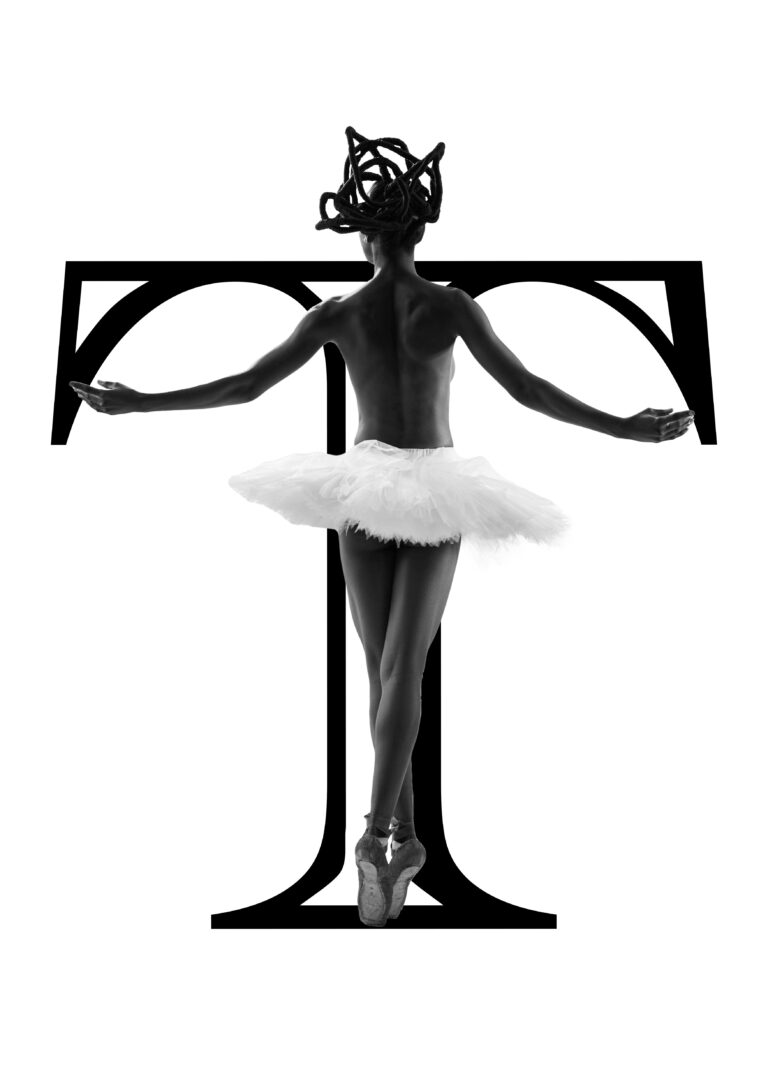
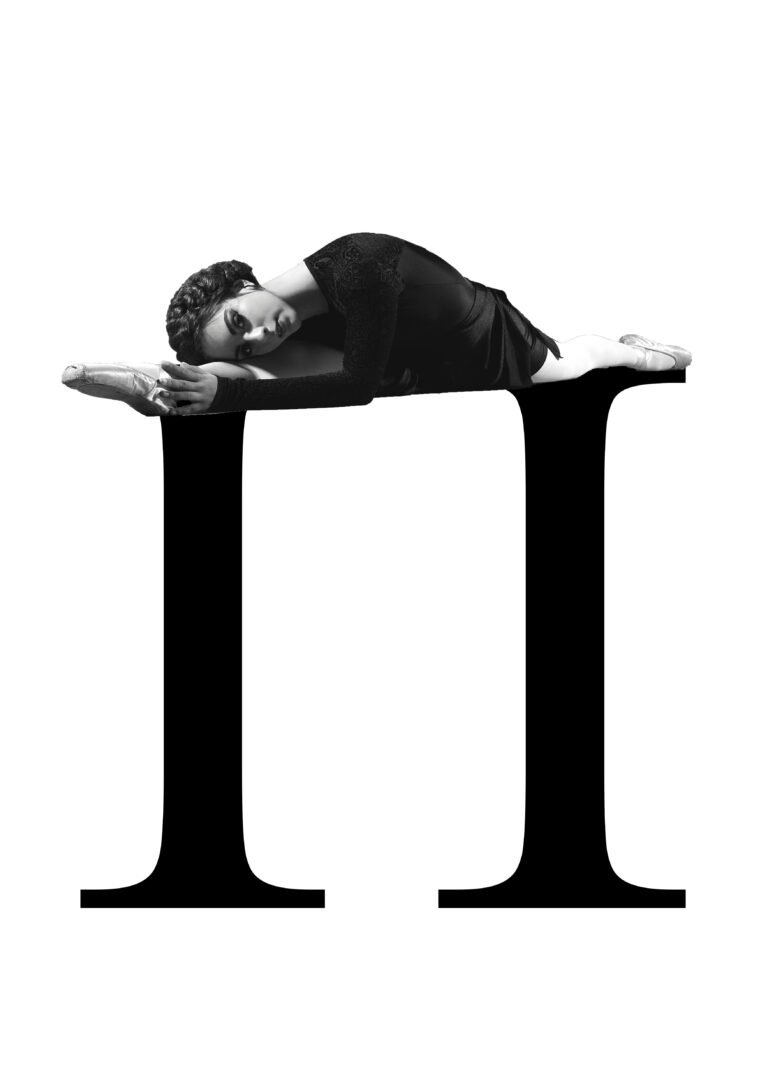
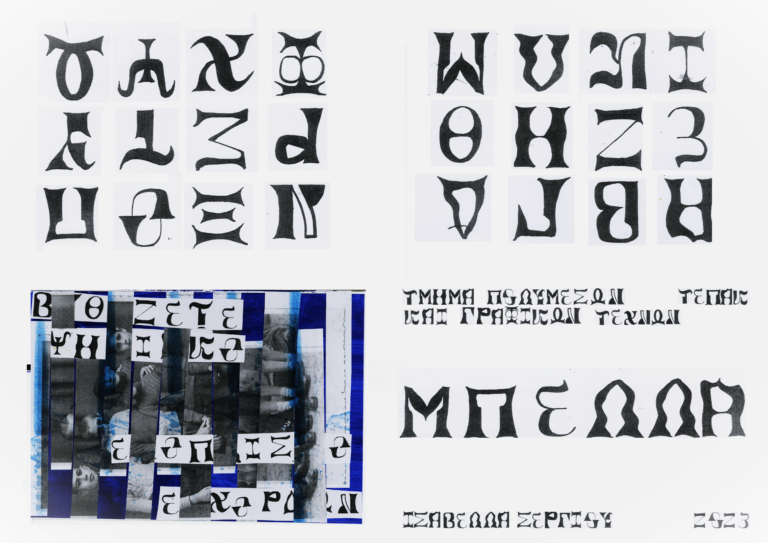
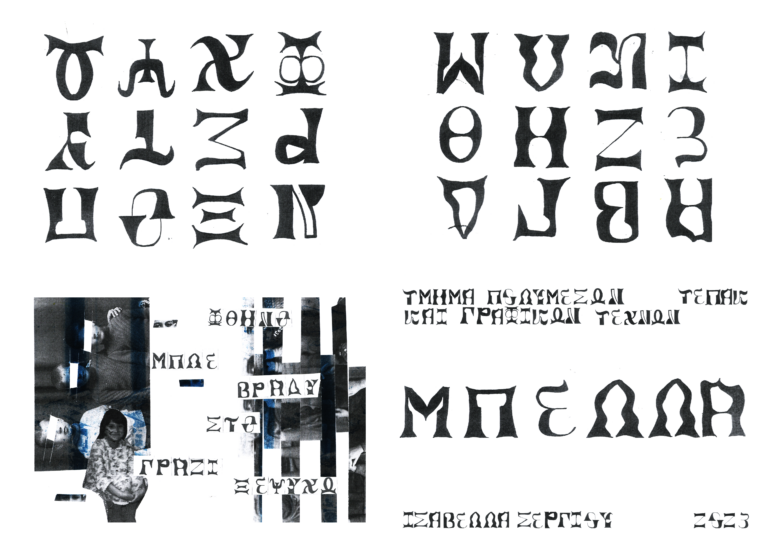
An editorial typography exercise. The brief: take a small body of text and treat it like a magazine spread. The goal isn’t decoration — it’s making the page legible, paced, and confident.
The system
One serif for the body, one sans for the captions. A vertical baseline grid. Repetition where it earns its place, contrast where it serves the reader.
What I learned
Typography rewards patience. The first version is always too loud — the third version usually whispers. Detailed write-up coming.
Campsite Scene
A campsite scene built in Autodesk Maya. Tent, fire pit, props — storytelling through environment design and lighting.
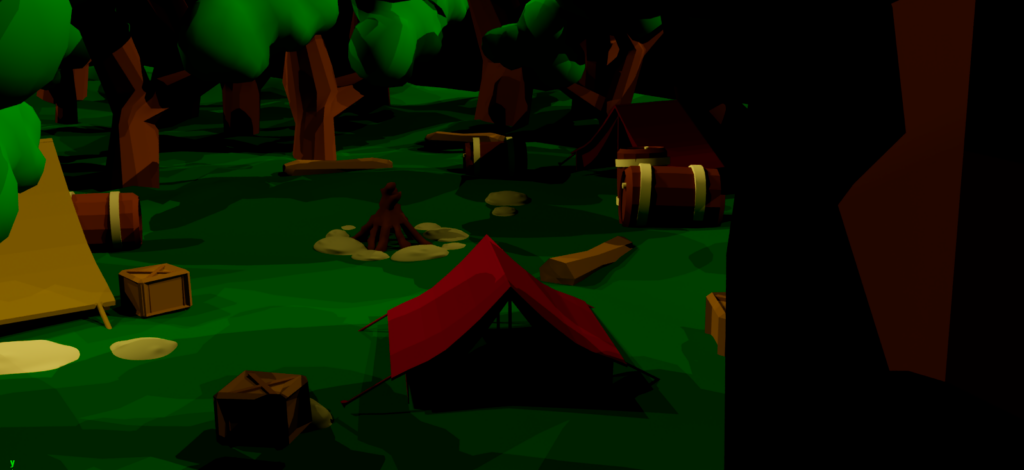
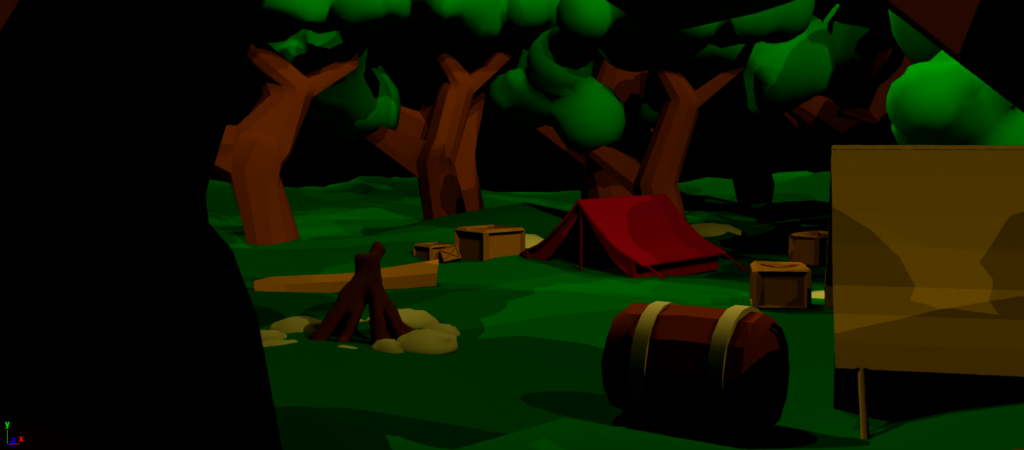
This was an environment piece — pushing past single-object modeling into a small narrative scene. I wanted the lighting to do most of the storytelling: dusk, low fire, the tent glowing from inside.
The props
Tent, fire pit, scattered camping gear. Each piece modeled cleanly, then dressed into the scene with weathering and small details that suggest someone has actually been here.
The light
Two-source lighting: warm fire at ground level, cool ambient sky bouncing in. The fire does the work, the sky keeps the scene readable.
This Portfolio Site
The site you’re reading. Built from scratch in WordPress with custom HTML / CSS. Six pages, one accent colour, no stock in the final cut.
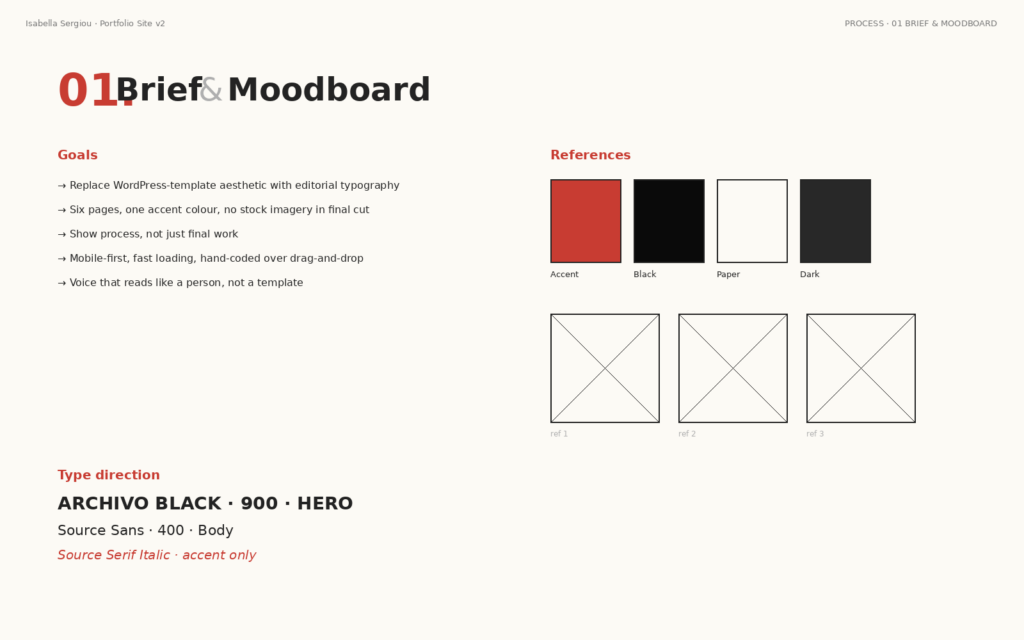
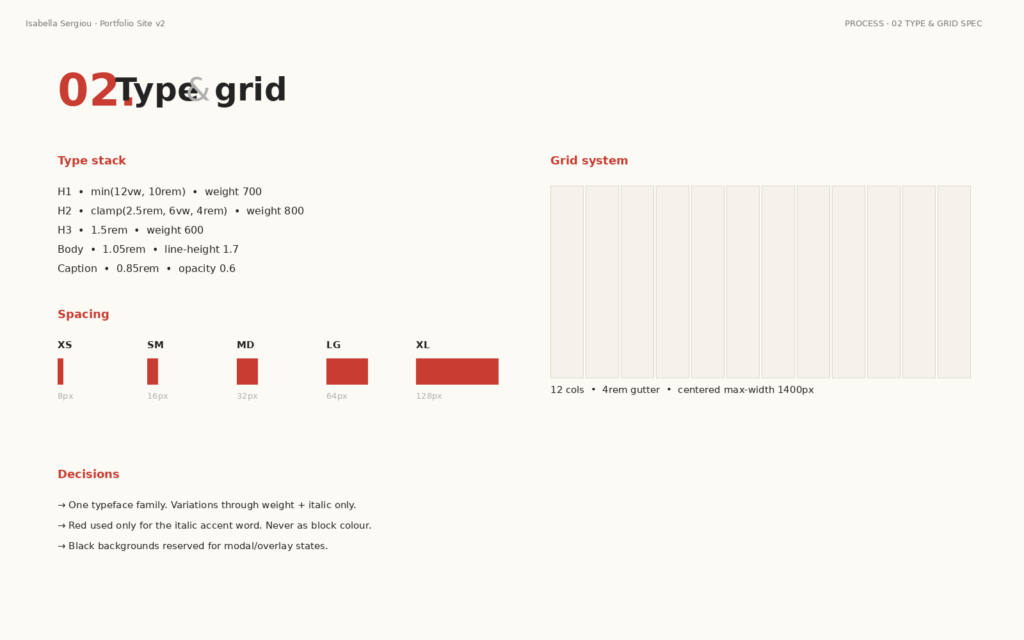
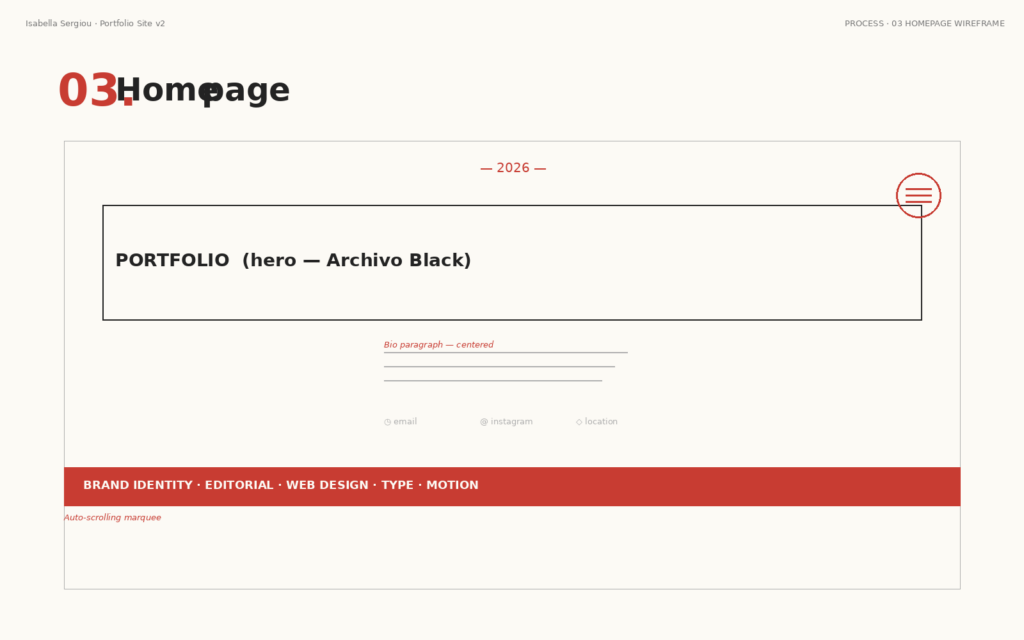
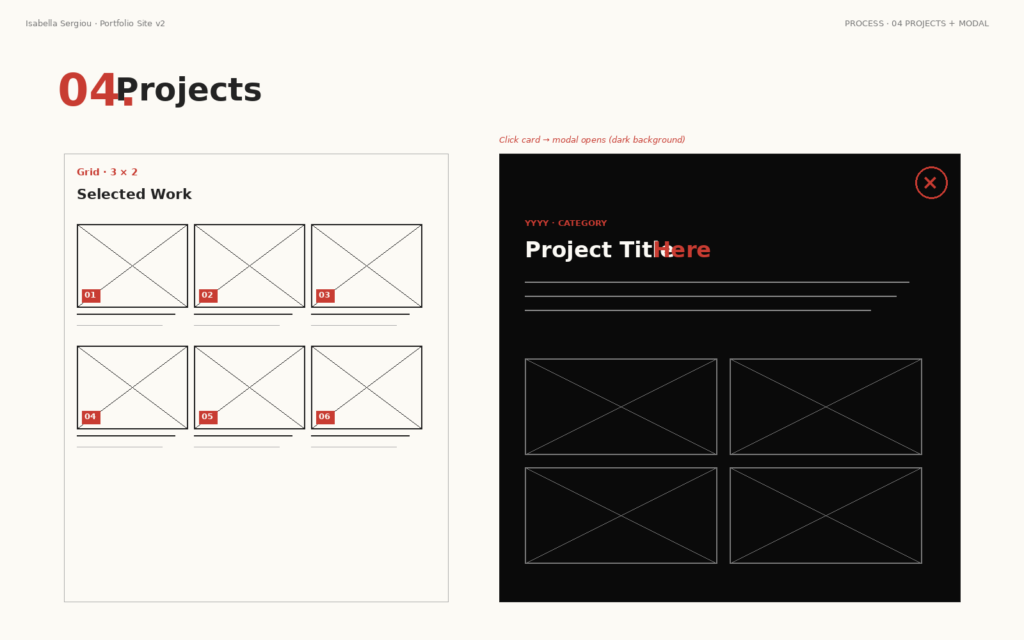
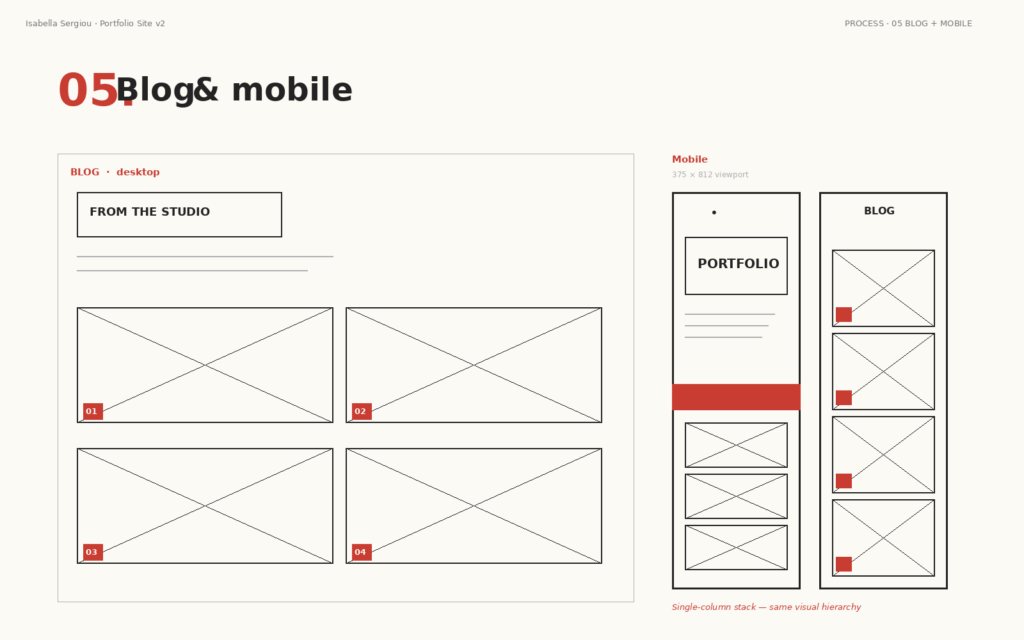
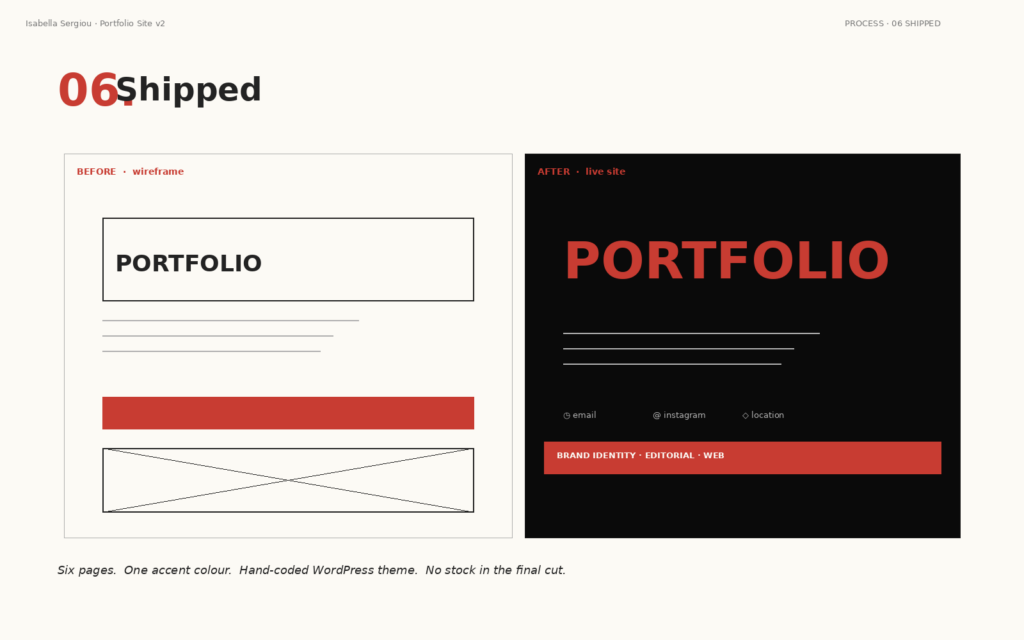
The brief I set myself: build a portfolio that doesn’t look like a portfolio template. Type-led layouts, big hero titles, one red accent, hand-coded CSS over drag-and-drop blocks.
The process
Started with paper mockups, then wireframes in Figma, then straight to code. The site went through three rounds of cutting — the first version had ten menu items, the final has six. Editing is the design.
What it taught me
Constraint is a feature. Every decision was easier once I stopped letting myself add things.
UIBS Loyalty System
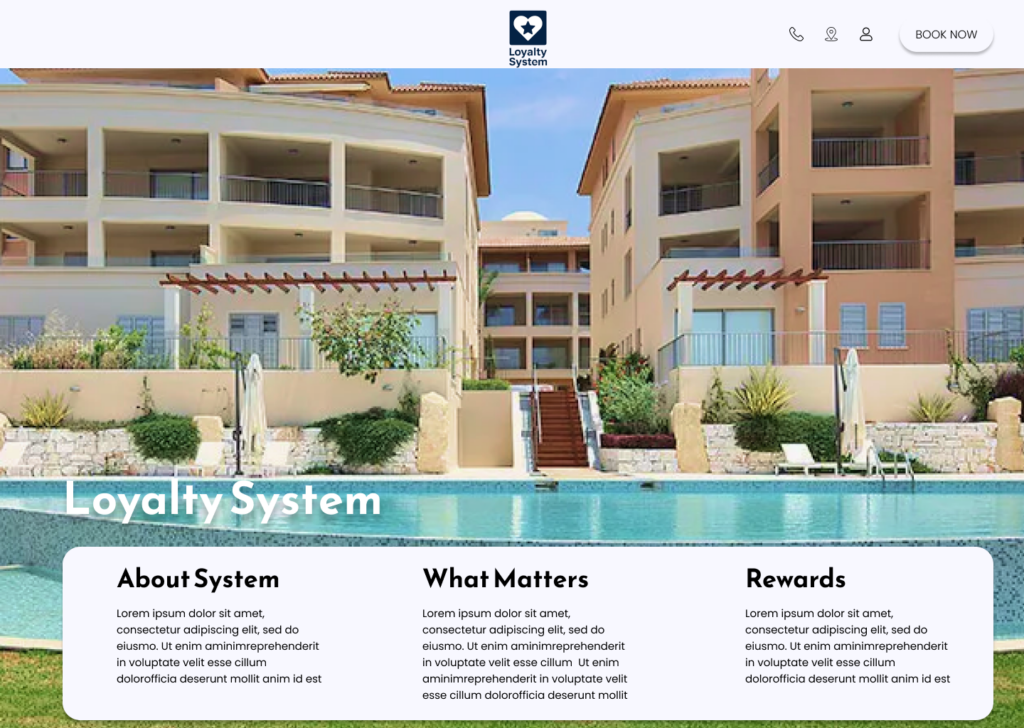
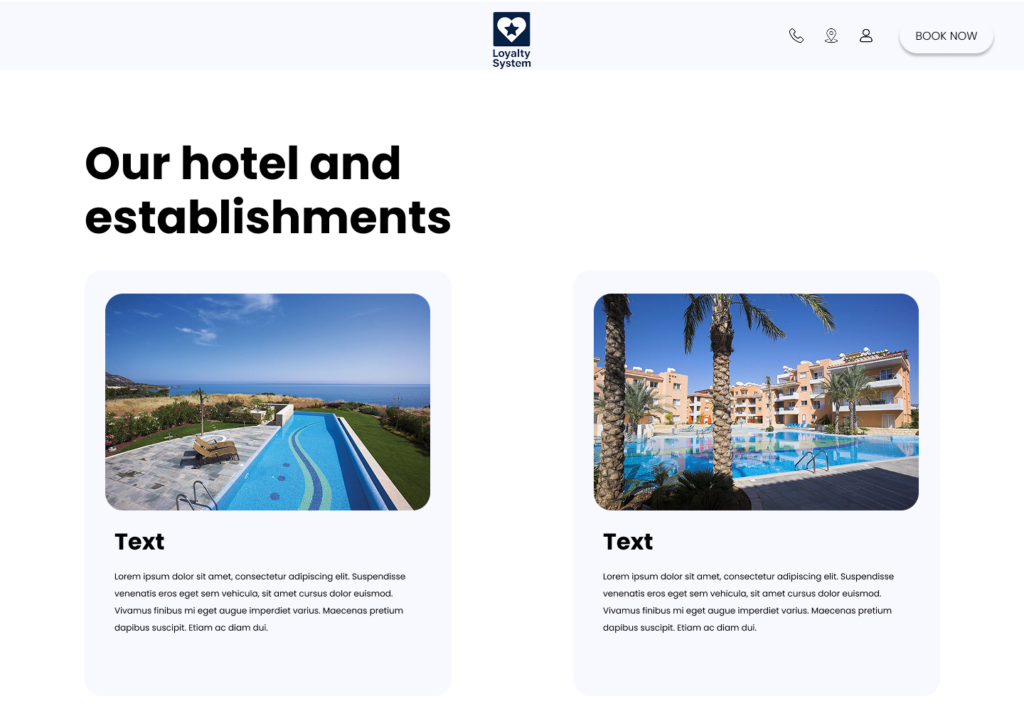
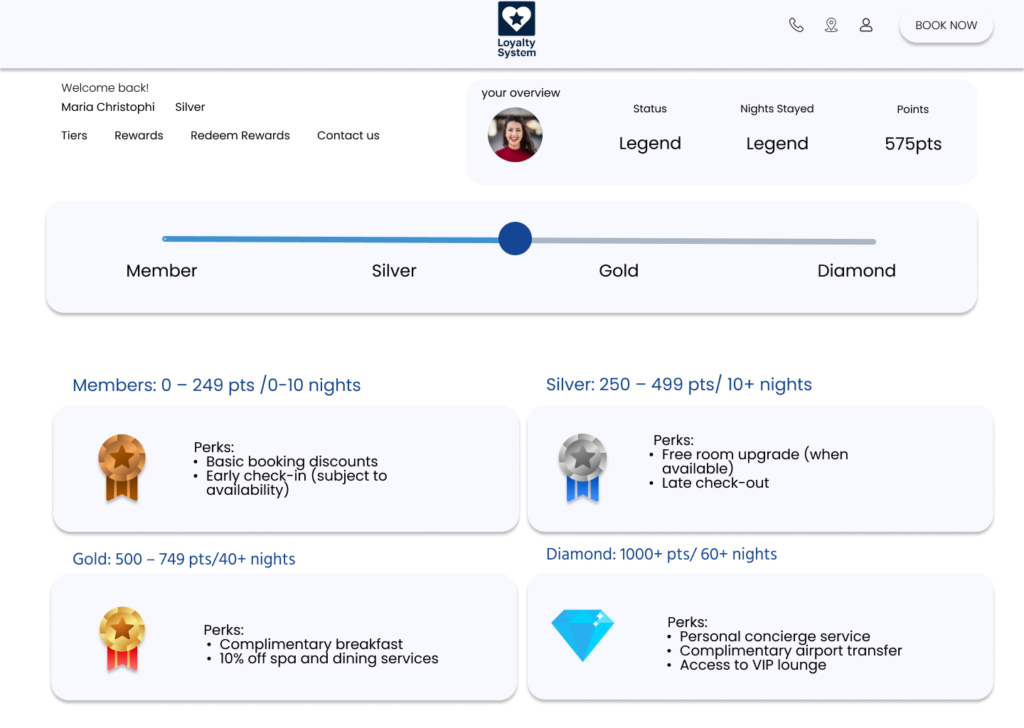
A loyalty system for hotels — built end-to-end with my team. Member-facing tiers + a full hotelier dashboard. Researched, sketched, wireframed, designed, and coded in HTML/CSS.
The brief
Our team was given the task of designing an interactive promotion and purchase platform specifically built for hotels. The loyalty system needed to be engaging and encourage real client involvement — not the dull “earn points, see number” version most hotels ship.
Research → BOVA
We anchored our visual research on BOVA’s branding system: Poppins as the type, considered button styles, an interactive carousel pattern, and a refined colour palette. The goal was to feel premium without feeling stiff.
Sketches and wireframes
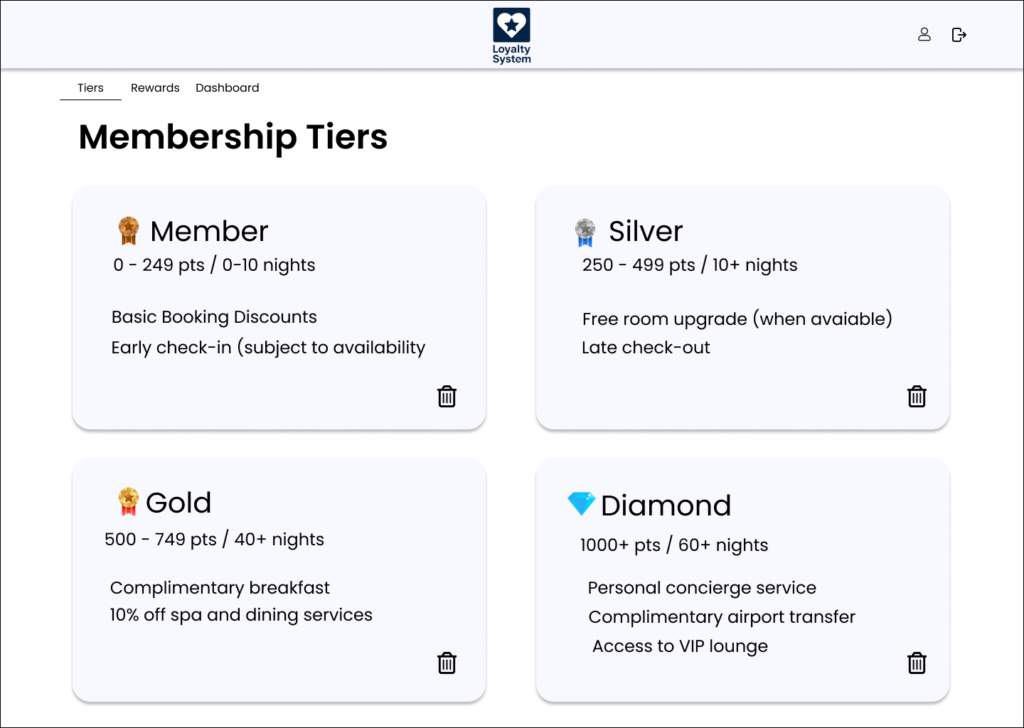
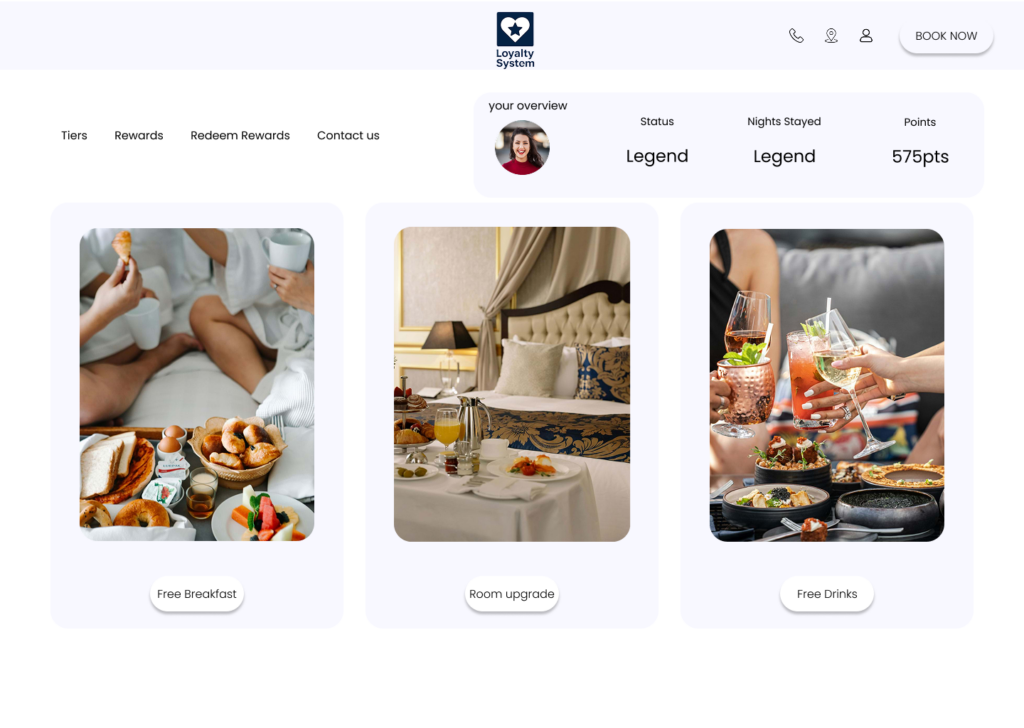
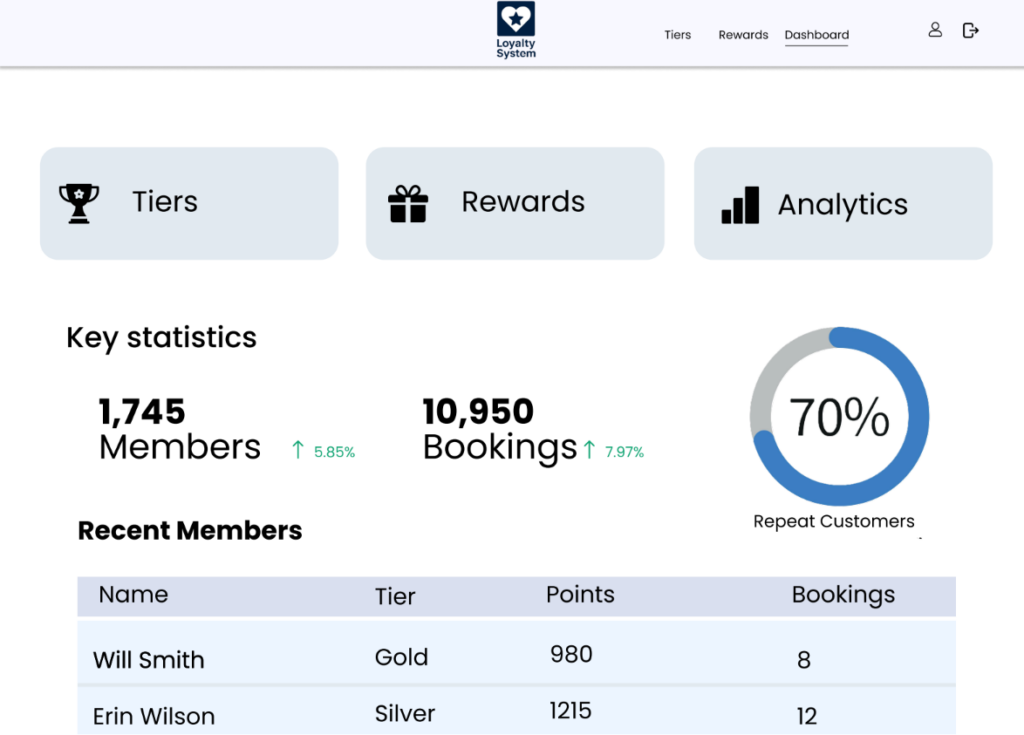
From sketches we worked into low-fidelity wireframes for two distinct audiences. The member home (a Join → Earn → Redeem flow with a tier carousel). And the hotelier dashboard — a customizer with rewards, levels, analytics, and add-reward controls.
High fidelity
The member home presents the tiers as glassy gradient cards — Silver, Gold, Platinum — with the perks list and a clear Learn More call. The hotelier dashboard reveals the engine: Tiers / Rewards / Analytics nav, key stats at a glance (Members, Bookings, Repeat-Customer rate), a recent-members table, and a built-in customizer for swapping rewards.
Built in HTML/CSS
The final deliverable wasn’t just mock-ups — we coded the system in HTML and CSS. Carousels, hovers, transitions, the lot. The brief said “interactive,” so we made it actually interactive.
Project Vault Runner
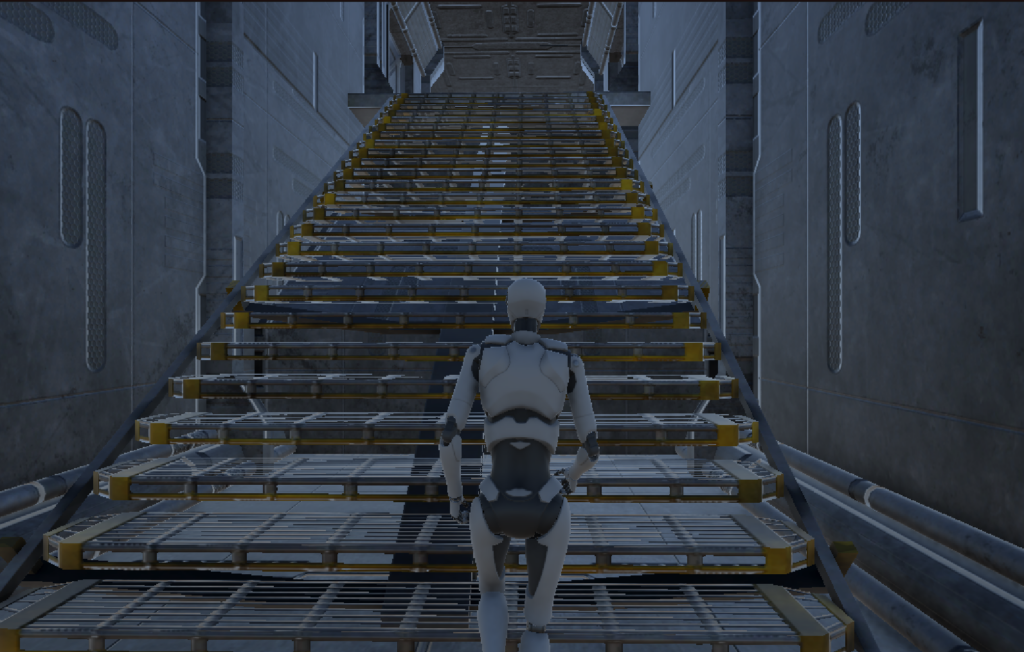
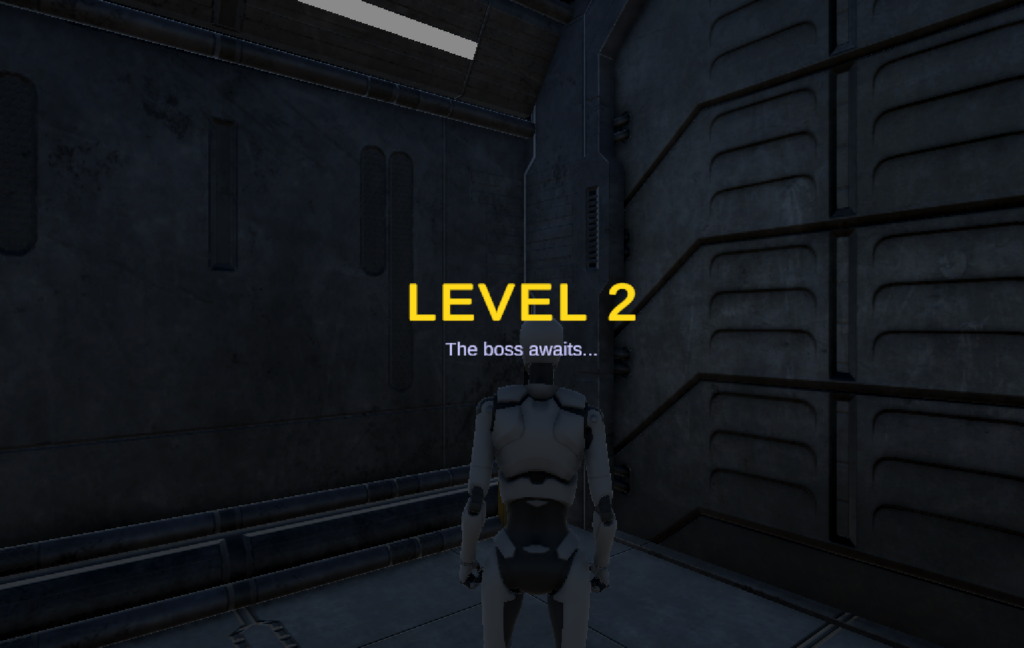
A two-level 3D survival game built in Unity for Lazaros Kouzelis’ 3D games class at TEPAK. You’re a robot stranded on a seat in deep space. Zombies come at you. Don’t let them touch you.
The brief
Design and build a 3D game with at least two playable levels. A class assignment that turned into one of my favourite Year 3 projects — I’d never built a real game before, and I wanted it to feel like something worth showing.
Built in Unity
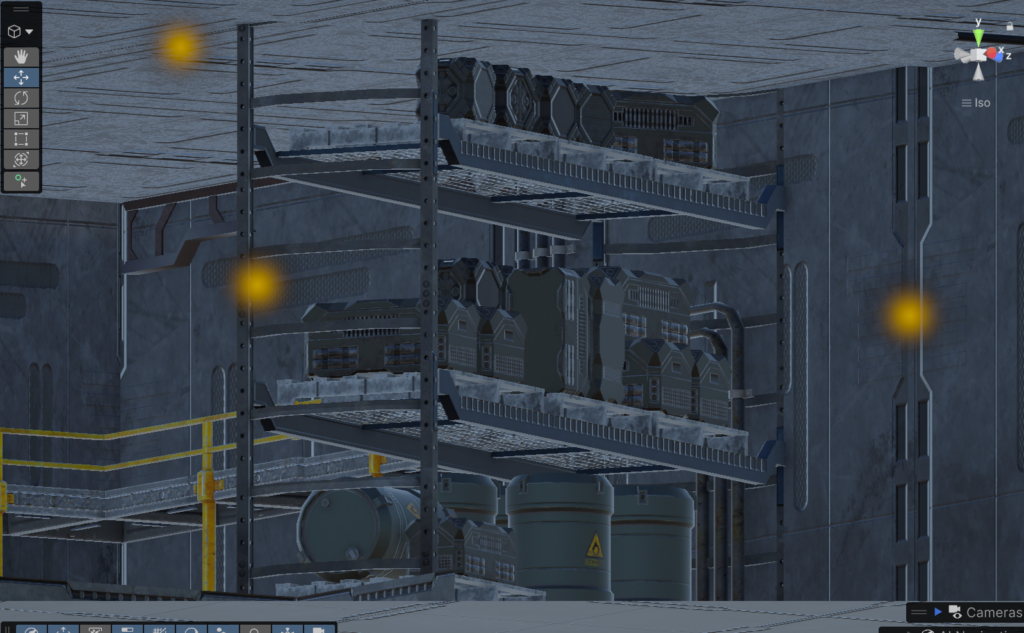
Modelled the environment, brought in zombie assets, wrote the gameplay scripts in C#, and tuned the difficulty curve until level 2 felt genuinely scary. Unity makes a lot of game-design ideas reachable in a semester — but every “easy” feature still asks you a hundred small questions.
The setup
You play a robot stranded on a seat in deep space. Zombies appear from outside the safe zone and head straight for you. There’s no escape — only defence. Survive long enough and you move to the second level, which gets faster, denser, and meaner.
What I learned
Game design forces you to think about something portfolio work usually skips — feedback loops. Every animation, sound, and visual cue exists to tell the player what’s happening. I spent more time tweaking timing than modelling. That’s the lesson.